AI Is Great, But Please Don't Jump the Shark: A Small Business Survival Guide

AI Is Great, But Please Don't Jump the Shark
Let's start with a confession: AI is amazing. It writes your emails, drafts your social posts, answers customer questions at 2 a.m., and never once complains about doing it. For small business owners juggling everything from invoices to inventory to that one customer who insists on calling instead of emailing, AI can feel like hiring a tireless assistant who works for free and never takes a lunch break.
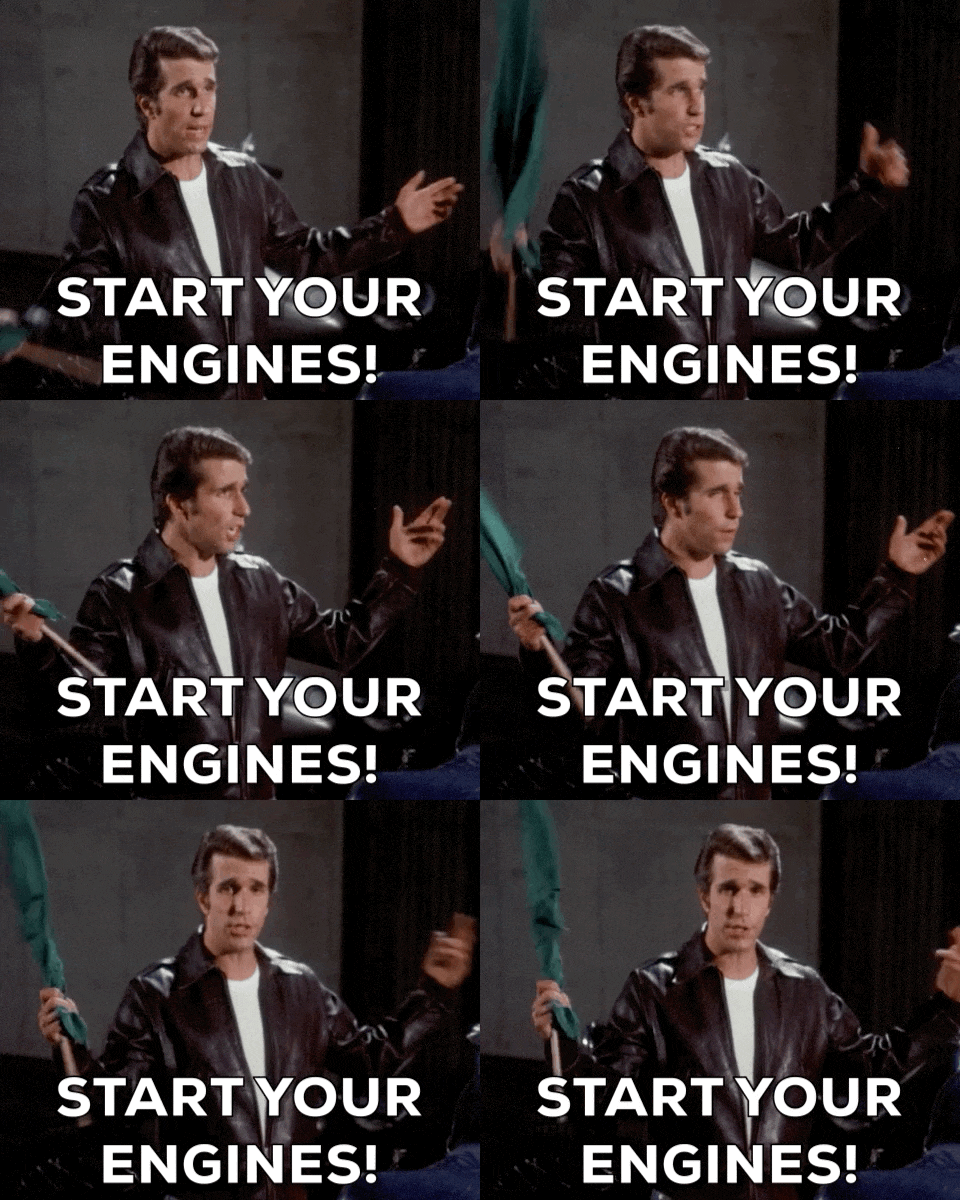
But here is the thing nobody tells you at the AI enthusiasm seminar: there is a fine line between "using AI to work smarter" and "accidentally convincing your customers, and Google, that no actual human being is involved in your business anymore." Cross that line, and you have officially jumped the shark. Fonzie on water skis. Everyone watching from the boat, wondering what happened to the show they used to love.
What Does "Jumping the Shark" Even Mean Here?
In case you are unfamiliar with the phrase, "jumping the shark" comes from a moment when a TV show gets so desperate for novelty that it does something so absurd, viewers realize the magic is gone. In small business terms, this is the moment when your AI-generated content becomes so obviously robotic, generic, or over-optimized that customers start to wonder if they are talking to a business or a very polite toaster.
Symptoms include:
- Blog posts that use the word "leverage" four times in one paragraph
- Customer service replies that are suspiciously perfect and eerily fast, every single time, at every hour
- Website copy that reads like it was written by someone who has never actually met a human customer, because, well, it was
- Reviews that respond so uniformly you start to suspect a bot wrote the "thank you for your feedback" replies too
Why This Matters More Than You Think
Small businesses run on trust. People do not choose the neighborhood bakery, the local plumber, or the family-owned accounting firm because they want the same generic experience they could get anywhere. They choose you because you are supposed to be, well, you. A real person with real opinions, a real sense of humor, and hopefully real baked goods.
When your content starts sounding like it was assembled in a content factory, customers notice. And here is the kicker: so does Google. Search engines are getting better at detecting low-effort, mass-produced AI content that lacks originality or expertise. If your website reads like every other AI-optimized site out there, you are not standing out. You are blending into a very large, very beige crowd.
The "Too Perfect" Problem
There is something almost suspicious about content that never has a typo, never has a strong opinion, and never sounds even slightly human. Real business owners get excited about things. They complain (politely) about supply chain issues. They tell customers a specific story about why they started their business, not a vague paragraph about "passion" and "quality service since inception."
If your "About Us" page reads like a corporate mission statement generator had one job and did it a little too well, it might be time to add some actual personality back in.
So How Do You Use AI Without Losing Your Humanity?
Good news: you do not have to swear off AI entirely and go back to writing every blog post by candlelight. You just need some guardrails.
- Use AI as a first draft, not a final answer. Let it get you 70 percent of the way there, then add your own voice, your own jokes, your own weird business stories.
- Keep specific details specific. AI loves vague phrases like "we pride ourselves on excellent service." Replace that with something only your business could say, like "we once delivered a cake through a snowstorm because someone's grandma insisted."
- Let your customer service replies sound like a person wrote them. A little imperfection is a feature, not a bug. Nobody wants to feel like they are chatting with a script.
- Review before you publish. If you read something out loud and it sounds like a robot pretending to be enthusiastic, it probably needs a human pass.
- Keep the weird stuff. The inside jokes, the local references, the slightly odd sense of humor that makes your brand yours. AI cannot replicate that, and honestly, it should not try.
What Google Actually Wants
Search engines are not anti-AI. They are anti-low-quality, anti-generic, and anti-content that adds nothing new to the conversation. Google's guidelines consistently reward content that shows real expertise, real experience, and a genuine point of view. Translation: they want to know a human is actually behind the curtain, even if AI helped write the first draft.
This means the businesses that will do best are not the ones avoiding AI altogether, nor the ones letting it run the whole show unsupervised. It is the ones using AI as a tool while keeping their own voice firmly in the driver's seat.
A Quick Sanity Check
Before you hit publish on that AI-assisted blog post, email, or website copy, ask yourself:
- Does this sound like something I would actually say out loud to a customer?
- Is there anything here that only my business could have written?
- Would a real customer read this and feel like they are talking to a person, not a script?
If you answered "not really" to any of these, it might be time to dial back the AI a notch and dial up the personality.
The Bottom Line
AI is a fantastic tool for small business owners who have too much to do and not enough hours in the day. Use it to save time, brainstorm ideas, and handle the repetitive stuff. Just do not let it replace the thing that makes your business worth choosing in the first place: you.
Keep the human in the loop, keep your voice loud and clear, and you will avoid ever having to explain to a confused customer, or a skeptical search engine, why your website suddenly sounds like it was written by a very polished, very soulless committee. No shark jumping required.